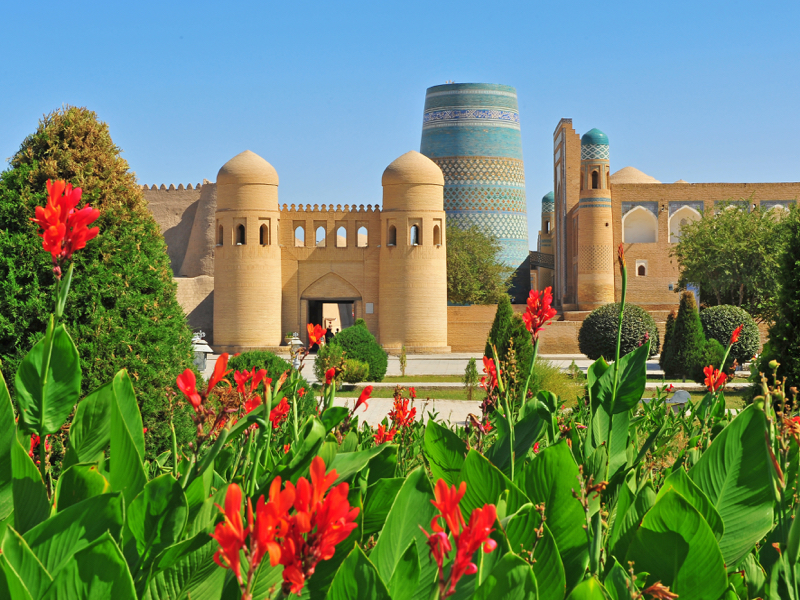
The Cities of Uzbekistan
Brimming with UNESCO World Heritage Sites, the cities of Uzbekistan are known for their mosques, mausoleums and sites linked to the silk road, an ancient trade route between China and the Mediterranean.Samarkand
The city of Samarkand is the 2nd largest city in Uzbekistan and is also one of the oldest continuously inhabited cites in central Asia. It was once a major city of the silk route and was made a UNESCO world heritage site in 2001. One of the city’s most notable landmarks is the Bibi-Khanym Mosque, although now a modern replica. Another landmark is Registan, the main square, which has 3 separate buildings Madrasa of Ulugh Beg, Sher-Dor Madrasa and Tilla-Kori Madrasa.
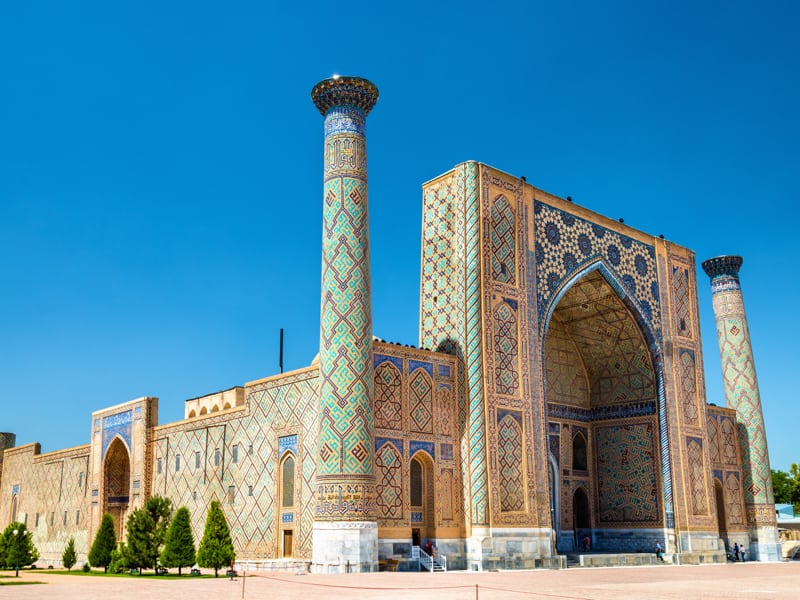
Tashkent
Tashkent is the largest and cosmopolitan capital of Uzbekistan. It is in the north east of the country and close to the border of Kazakhstan. In 1219 the city was destroyed by Genghis Khan, and it was then rebuilt and profited from the silk road trade, then in 1966 it was hit by an earthquake and now little remains of Tashkent’s traditional architectural heritage. The city’s streets are lined with trees, fountains and parks, and rich with museums and soviet-era monuments, such as Kukeldash Madrasah, Chorsu Bazaar and Telyashayakh Mosque.

Bukhara
Located on the silk road, Bukhara has been a centre of trade, scholarship, culture and religion. The city is a museum, with about 140 architectural monuments, including numerous mosques and madrassas. The city has 3 main historic monuments, the Po-I Kalan, the Grand Foundation, which has the Kalyan Minaret, known as the tower of death, Kalan Mosque and Mir-I Arab Madrassah. The architectural ensemble of Lab-I Hauz, a centrepiece which means by the pond, once acted at the cities principal source of water. Known as the Ark is Bukhara Fortress which was initially built in the 5th century AD. It was a military structure, but also encompassed a town. It is now a tourist attraction, and houses museums covering its history.
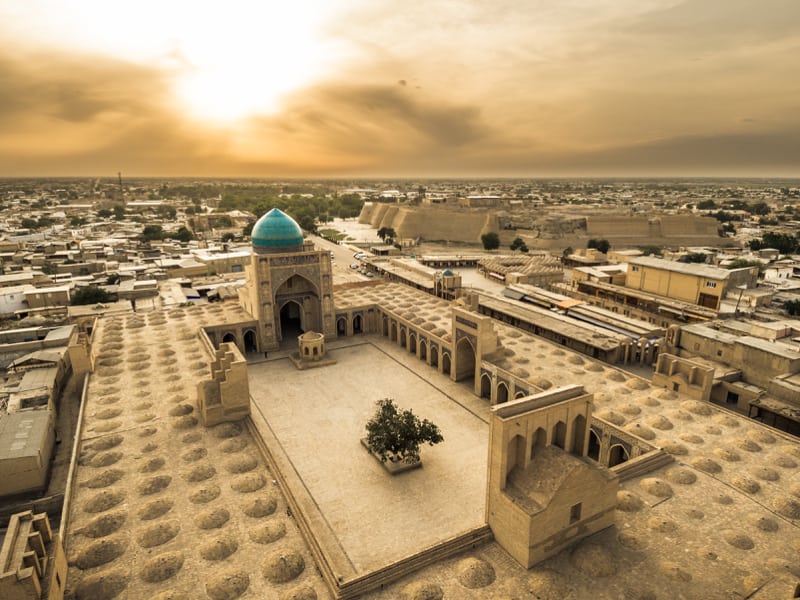
Khiva
Established at the beginning of the Christian Era, the city has a population of approximately 50,000. It is split into two parts, Dichan Kala which is the outer town, and the Itchan Kala which is a walled inner town. Itchan Kala was the first site in Uzbekistan to make the UNESCO World Heritage List, with the foundations said to have been laid in the 10th century.