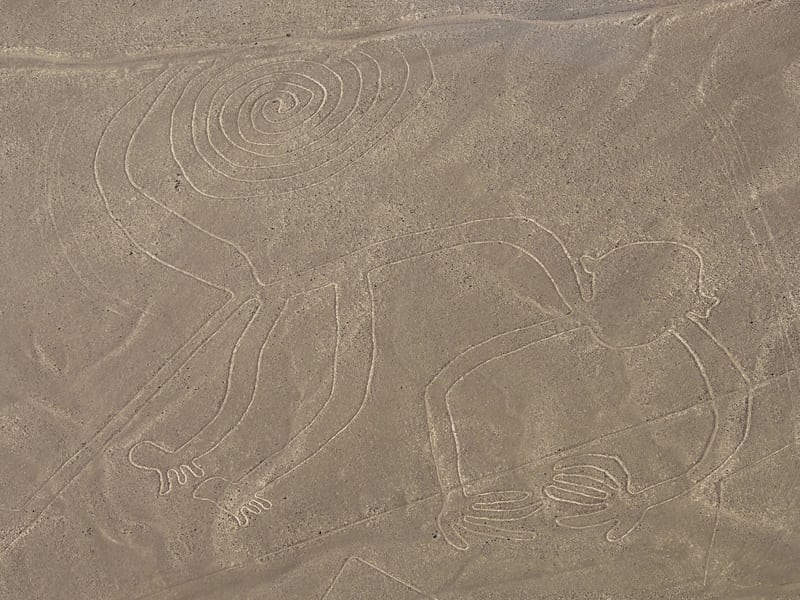
The Nazca Lines in Peru
These spectacular geoglyphs were created between 200 BC and 700 AD with the figures ranging from simple lines to stylised spiders, monkeys, fish, llamas, lizards and human figures.About the Nazca Lines
These spectacular geoglyphs are located between the towns of Nazca and Palpa along the northern Pacific coast and were designated as a UNESCO Heritage Site in 1994. Created between 200 BC and 700 AD the figures range from simple lines to stylised spiders, monkeys, fish, llamas, lizards and human figures. There are more than 70 different zoomorphic designs that can be spotted. The lines were created on such a large scale that it wasn’t until the 1920′s, when Peruvian airlines started to fly from Lima to Arequipa, that they were recognized as figures.
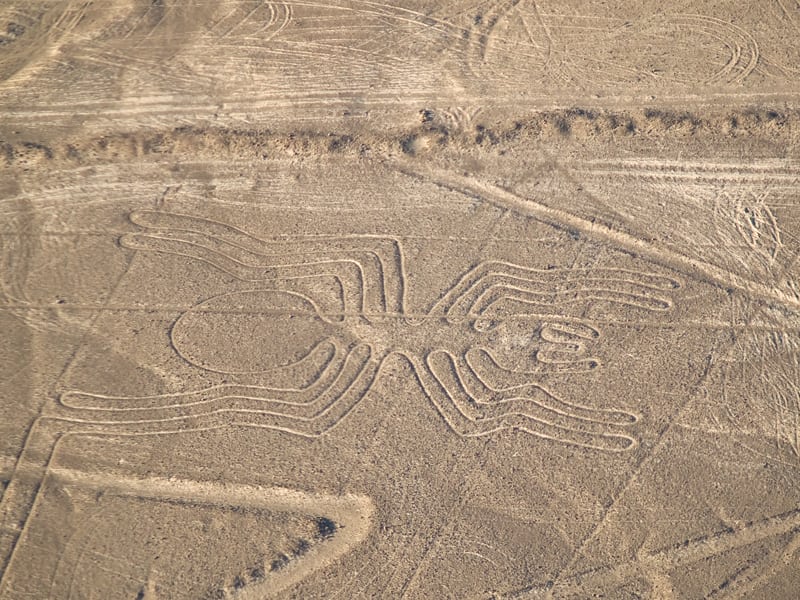
How were the Nazca Lines formed?
They have been created using naturally occurring reddish pebbles, which when removed uncover the whitish/grayish ground beneath. Due to the location of the lines they have been preserved naturally, however with extreme changes in weather conditions, this can alter the design of the lines temporarily. There is now fear that due to an influx of squatters inhabiting this land since 2012 that the lines are starting to deteriorate.
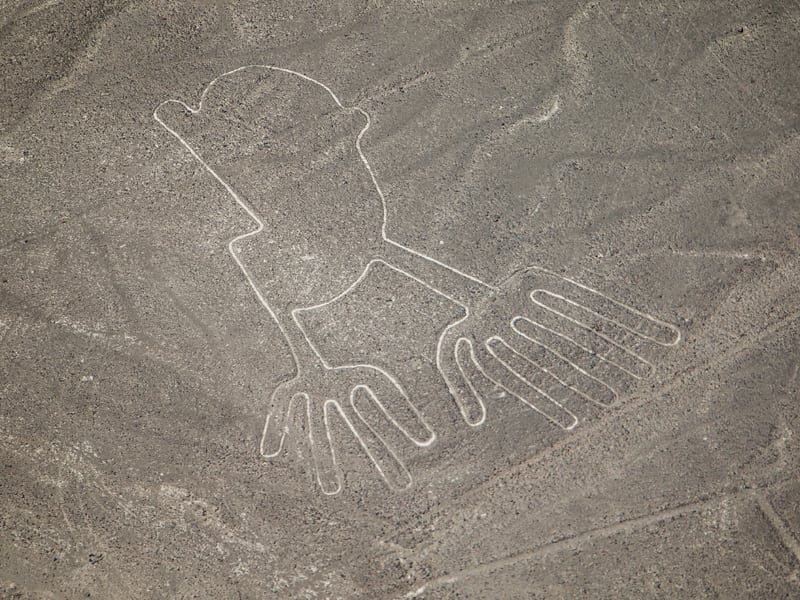
Why were they created?
The purpose of the Nazca Lines is still unknown, however there is speculation that they were formed by the Nazca people (an ancient prehistoric culture) to bring underground water to the surface for irrigation, or were made as part of a ritual to “summon” the water.

How can you see them?
It was said that The Nazca Lines were only visible from the air, however they can also be spotted from the surrounding foothills or other high places. Many tourists opt to view them by taking a 35 minute thrilling aircraft ride over the Nazca Lines, and to do so will cost you around USD100, including transfers and airport tax. Due to the demand it is best to book an excursion at least 2-3 days in advance and many flights operate from the cities of Pisco, Nazca and Ica.